You walk along a mountain river. The water speeds up, the noise increases, and suddenly you spot a white curtain cascading down the rock. Waterfall or cascade? The answer seems obvious, but in the field, the boundary between the two quickly blurs. Understanding what distinguishes a cascade from a waterfall requires observing the rock, the slope, and the behavior of the watercourse, not just the visual impression.
Geomorphology of the terrain: what the rock tells
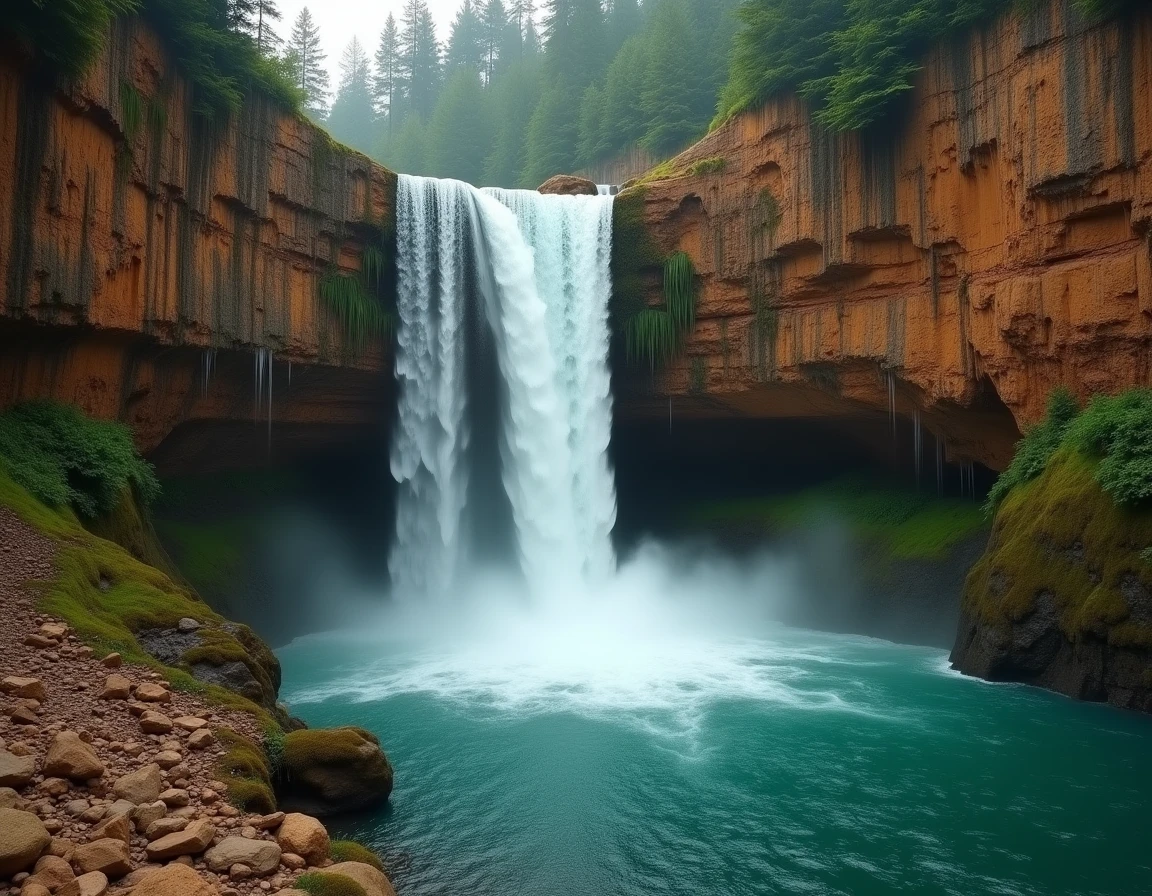
The first thing to look at is not the water, but the stone beneath it. A waterfall forms where the watercourse meets a sharp break in the terrain: a geological fault, a contrast between hard rock and soft rock, or an ancient lava blockage. The water then falls from a single steep edge, almost vertically.
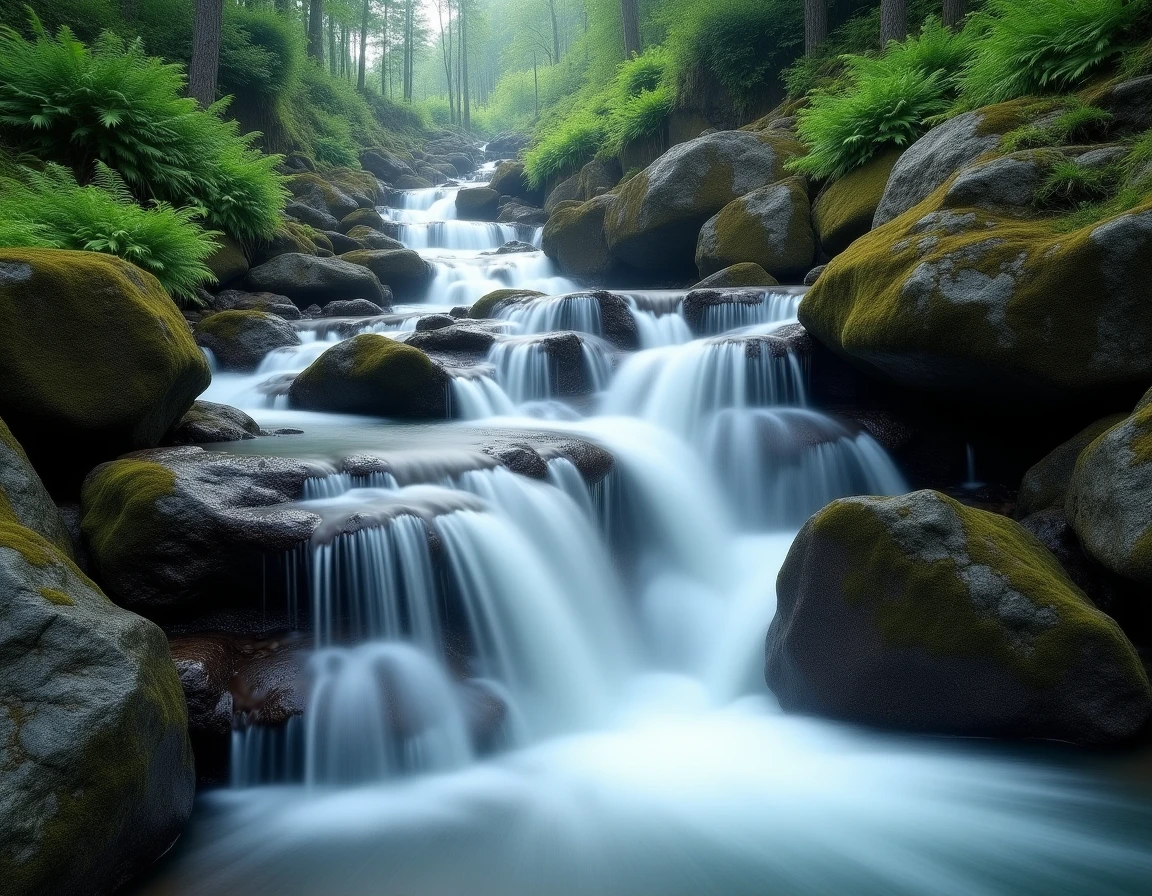
A cascade, on the other hand, appears when the slope is irregular. The rock forms ledges, natural steps, and the water descends in successive stages, like a staircase. To fully grasp the difference between a cascade and a waterfall, you must remember this principle: the waterfall involves a sharp cut in the terrain, while the cascade involves a succession of ledges.
Have you ever noticed that some waterfalls seem to have a deep pool at their base? This is because the energy of the water concentrates on a single impact point. The cascade, in contrast, distributes its energy over a longer distance, which explains why accessible areas are often found between its ledges.
Slope, season, and flow: when classification becomes blurry
On paper, the distinction seems clear. In the field, reality is more nuanced. The same rock formation can resemble a cascade in summer and a waterfall in spring, simply because the flow has changed.
The role of flow in appearance
When the flow is low, the water follows every contour of the rock. It navigates around boulders, sliding from ledge to ledge. The steps are visible, and the flow clearly resembles a cascade. With snowmelt or after heavy rains, the volume of water increases to the point of drowning the intermediate ledges. The whole then takes on the appearance of a single massive waterfall.
The flow transforms the appearance, not the geological structure. If you mentally clear the water to focus only on the rock, the distinction becomes clear again.
The slope as an indicator
You can also assess the general angle of the flow. A typical waterfall presents an angle close to vertical. A cascade occupies a sloped plane, sometimes over several dozen meters in length. In practice, many natural sites lie somewhere in between, with a steep slope but not quite vertical.
This gray area explains why place names are not reliable for identifying the type of flow. In Norway, Iceland, or France, local names frequently mix terms, and a site called “cascade” can very well be a true waterfall.
Three practical criteria to decide in the field
Rather than seeking a perfect definition, focus on three concrete observations when faced with a flow.
- Count the visible ledges. If the water marks at least two or three distinct steps before reaching the bottom, you are likely in front of a cascade. If the water falls in a single uninterrupted flow, it is a waterfall.
- Look at the base of the flow. A deep, carved pool at the foot of the water curtain indicates a waterfall, because the energy concentrates on a single point. Areas of swirling water on the slope indicate a cascade.
- Evaluate accessibility. Cascades often offer areas where you can approach, walk at the foot of the ledges, or even pass behind a partial water curtain. Vertical waterfalls are more exposed, and direct access to the base is often limited by the force of the impact and the spray.
Erosion and disappearance: a classification that evolves over time
One aspect that is often overlooked: the distinction between a cascade and a waterfall is not fixed on a geological scale. Erosion constantly modifies the rock. A waterfall can, over the centuries, carve steps into the cliff and gradually become a cascade.
The reverse also exists. The collapse of a rock face can remove intermediate ledges and transform a cascade into a waterfall. The San Rafael waterfall in Ecuador illustrates an even more radical phenomenon: a chasm has swallowed part of the water source, and the largest waterfall in the country has simply disappeared from the surface.
Observing a cascade or a waterfall is observing a geological snapshot. The site you see today may not have had the same shape a few thousand years ago, and it will have a different one in the future.
Why the season of your visit matters
If you hike in the mountains and want to identify what you see, keep in mind the time of year. A site visited during high water can give a misleading impression. Returning to the same place during dry periods often reveals the actual structure of the rock, and thus the nature of the flow.
The best approach remains to combine direct observation with context: the shape of the rock, the number of ledges, the verticality, and the flow at the moment. None of these criteria alone is sufficient, but their combination allows for the classification of the vast majority of natural sites you will encounter while hiking, in Iceland, Switzerland, France, or elsewhere.