Between the accumulated fatigue of the week and the abundance of options available, free time paradoxically becomes a source of frustration. Enjoying leisure activities daily is not just about finding an activity: the question revolves around the very nature of what we choose, its frequency, and its actual effect on mental recovery. This article compares leisure formats based on their ability to reduce cognitive load and generate a sense of accomplishment.
Passive or Active Leisure: What Cognitive Friction Changes
The distinction between passive leisure (watching a series, scrolling on a social network) and active leisure (cooking, recreational sports, drawing) is not a value judgment. It is based on an observable fact: activities that require minimal engagement provide immediate relief but rarely leave a feeling of progress.
Recent content in the wellness and lifestyle sector converges on one point: leisure activities that combine relaxation and personal growth are taking precedence over purely passive leisure. Cooking, gardening, guided reading, or recreational sports are cited as activities that produce both pleasure and a tangible result.
| Criterion | Passive Leisure (e.g., streaming) | Active Leisure (e.g., cooking, yoga) |
|---|---|---|
| Start-up Time | Almost none | Some minutes of preparation |
| Cognitive Friction | Very low | Moderate, decreasing with practice |
| Sense of Accomplishment | Low to none | Moderate to high |
| Effect on Mental Fatigue | Temporary relief | More lasting recovery |
| Screen Dependency | High | Variable (often low) |
This table highlights a simple trade-off: reducing the friction at the start of an active leisure activity often makes it as accessible as passive leisure. Preparing ingredients the night before, leaving your yoga mat unfolded, keeping a sketchbook open on the table – these micro-actions eliminate the entry barrier.
Those who wish to discover leisure activities with The Living Web will find concrete suggestions to identify activities suited to their pace, without going through a lengthy exploration phase.

Ritualizing Leisure Activities: Regularity Over Quantity
Piling up three activities on the weekend to compensate for a week without a break does not work. Recent approaches to managing free time emphasize a shift in perspective: ritualizing a short leisure activity each day is better than a marathon on Saturday.
The micro-organization of free time is based on one principle: associating a fixed time slot, even brief, with a specific activity. Not an hour of meditation, but ten minutes of reading after lunch. Not a three-hour painting workshop, but twenty minutes of sketching before dinner.
What Distinguishes a Ritual from a Chore
A leisure ritual works when it meets three conditions:
- It starts without conscious decision (the materials are ready, the time slot is fixed, the activity does not require planning)
- It provides pleasure from the first minutes, without a frustrating warm-up phase or performance goal
- It remains flexible: if the time slot is missed one day, resuming the next day generates no guilt
The most common trap is to turn a leisure activity into a measurable obligation. Setting a goal for pages read or kilometers run often destroys the pleasure that justified the activity in the first place.
Leisure and Digital Overload: Choosing Low Screen Dependency Activities
Mental fatigue at the end of the day largely comes from the time spent in front of a screen at work. Following up with a leisure activity that requires another screen (video games, browsing social networks, streaming) does not break the cycle of visual and cognitive demand.
Recent recommendations on choosing leisure activities take this reality more into account. They guide towards short, easy-to-start activities that are less dependent on screens. Music, gardening, and cooking emerge as low digital friction leisure activities.
Hybrid Formats: Digital Serving Off-Screen
Digital is not an enemy of leisure. Online workshops, virtual museum tours, or remote creative communities allow learning a technique before practicing hands-free. The hybrid use works when the screen serves as a springboard, not a destination.
A yoga class watched online and followed at home, a cooking tutorial watched once and then reproduced from memory, a guided meditation playlist listened to without looking at the screen: these formats use technology to reduce the entry barrier without prolonging exposure.
Group or Solo Leisure: Two Distinct Effects on Mental Health
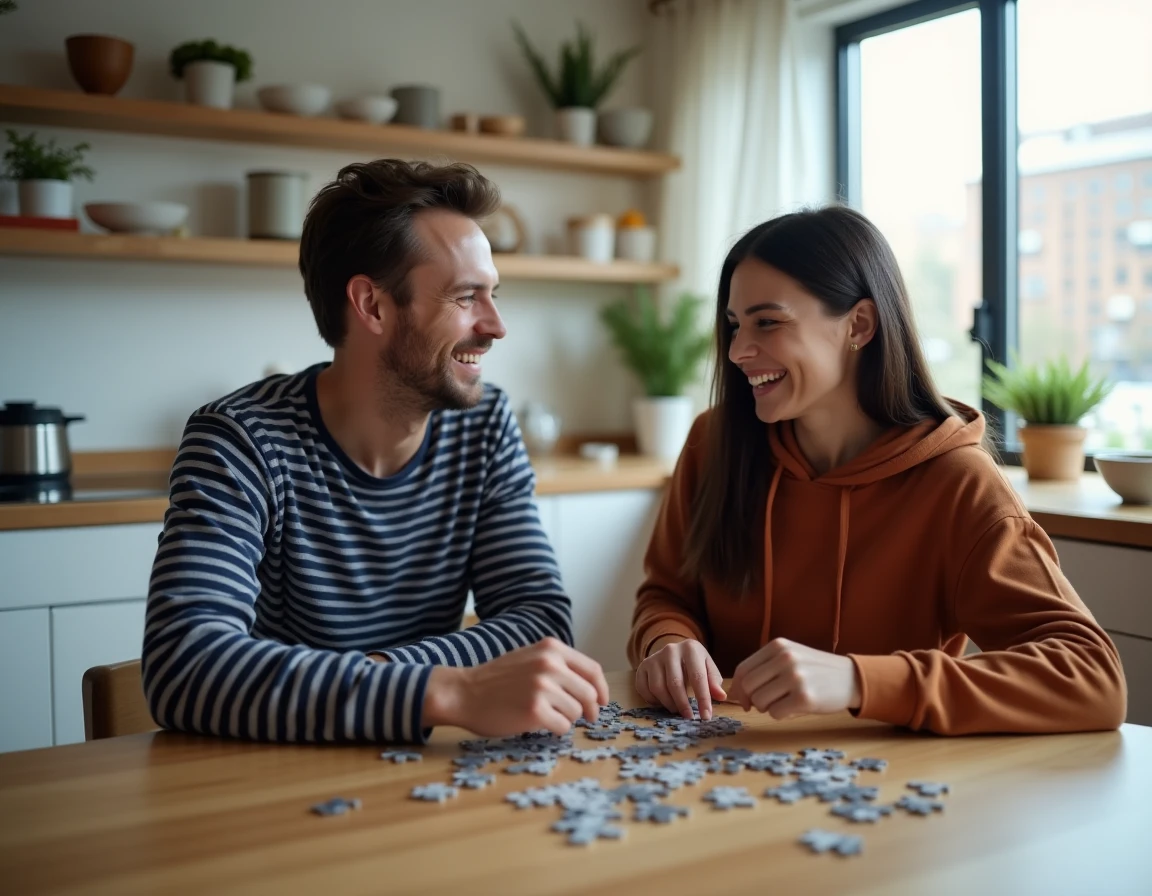
Practicing an activity alone and practicing it with others does not produce the same effect. Shared leisure activities (team sports, group workshops, book clubs) add a social dimension that enhances the sense of belonging. Solitary leisure activities (reading, meditation, drawing) promote introspection and cognitive recovery.
- Group activities are suitable for people who spend their workdays in autonomy and feel isolated at the end of the week
- Solo activities benefit more those whose professional life involves constant interactions and high social stimulation
- Alternating between the two formats throughout the week allows covering both needs without saturating one or the other
The choice between solo and group is not an abstract preference. It directly depends on what the workday has consumed in terms of social energy.
The takeaway from these comparisons is clear: an effective leisure activity is one that compensates for what daily life exhausts, not one that adds an additional layer of identical stimulation. Identifying whether your fatigue is cognitive, social, or physical guides the choice much more surely than a list of trendy activities.