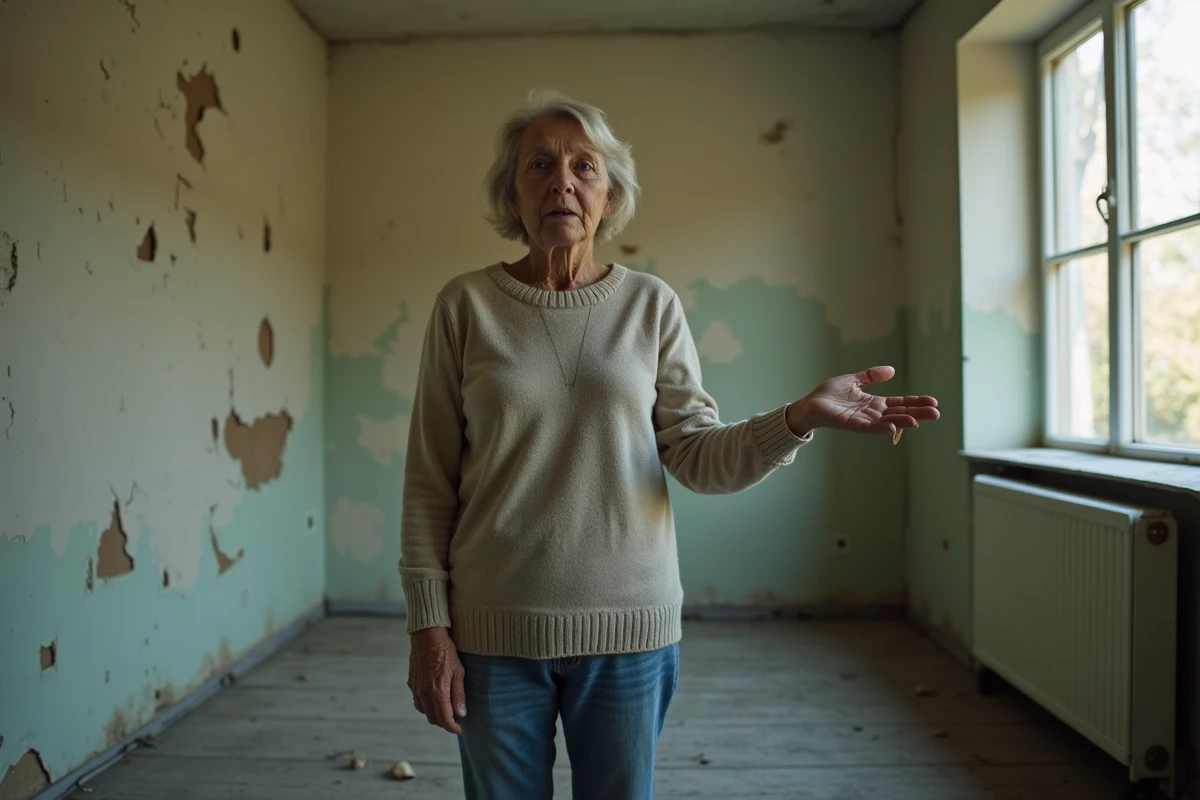
The tax administration rarely acts randomly. A dilapidated house, even completely uninhabitable, does not automatically expect any favors from the tax authorities: they demand proof, nothing less, and it is on this requirement that so many cases get bogged down.
Everything hinges on the quality of the file. The tax office grants nothing on the benefit of the doubt: without tangible elements, the request does not survive long. Showing two damp walls or a rotten floor is never enough; it is necessary to document, demonstrate, and accumulate specific points revealing the absolute impossibility of living on site. Every piece, every date, every document matters.
At what point does a dwelling become fiscally uninhabitable?
It is neither the crumbling walls nor the broken heating that will convince the tax administration. The transition to uninhabitable occurs the day the risk to health or safety becomes evident: recognized unsanitary conditions, declared peril, prohibition of occupancy. Here, there is no amicable arrangement; the only truly recognized proof remains the order of peril or unsanitary conditions signed by the town hall. In its absence, the file must align other objective and solid elements, always dated and cross-referenced to prove one thing: no one could live here, period.
To explore in detail each step and the expected procedures, it is worth consulting the article proving the uninhabitability of a dwelling on Flash Immobilier, which details the entire process to adopt in dealing with the tax administration.
Building a solid file: method and tips
Assemble each proof without fail or approximation
A solid file tolerates neither gray areas nor approximations. The more numerous, precise, and temporally convergent the documents are, the less the tax office can raise objections. One cannot settle for a few photos: a tightly woven chronology, originals, and supporting documents issued by professionals are required.
Here are the documents that the administration concretely expects during the examination of the file:
- Copy of the order of peril or unsanitary conditions issued by the town hall
- Report from an expert or detailed finding from a judicial commissioner
- Invoices, intervention orders, or quotes related to safety work or disconnection of utilities
- Official certificates of meter removal (water, gas, electricity)
- Datable photographs clearly showing the state of the dwelling and proving that it can no longer be inhabited
In practice, everything must overlap during the claimed period. For example, after a flood, some gather the town hall’s order, a bailiff’s report, pumping invoices, the certificate of meter disconnection; together, they outline the reality of uninhabitability from start to finish. Behind this meticulous work, the consistency of dates and the precision of the file often make administrative rigidity yield.
Effectiveness lies in order and clarity: correctly numbered appendices, rigorous chronology, not a detail out of place. A file that is too messy, disparate proofs, or spaced out in time: the risk of refusal skyrockets.

Speeding up the tax process: speed and vigilance
Act quickly, submit at the right time
As soon as the first official proof of uninhabitability is gathered, the public finance center must be notified without delay. A departure before July 1 allows for the exemption to apply for the current year; each month passed after the declaration represents a loss that no appeal will compensate later.
What changes regarding the tax if the vacancy is recognized
The gradual reduction only applies to periods that are effectively and totally uninhabitable, proven continuously without interruption. The minimum required duration is three consecutive months, and each period must be able to be confirmed with supporting documents. To refine calculations, one can use the Service-Public.fr simulator for TLV or THLV.
Before sending, certain recurring pitfalls must be avoided:
- TLV/THLV: the coverage of proofs must be complete, the dates must follow without interruption; otherwise, the tax office will dismiss the request
- Furnished secondary residences: the status does not exempt anything; vacancy is only recognized if uninhabitability is suffered and fully proven in the eyes of the administration
A simple missing document or ambiguity about the dates, and it’s the end of the road before it even begins. Yet, through method, rigor, and a well-organized file, many individuals have already achieved success, even against the most inflexible administrative apparatus.
A demanding, time-consuming journey, often fraught with twists and turns… But against the tax machine, tenacity pays off: sometimes, a single well-prepared file is enough to break down the fortress of administrative evidence.