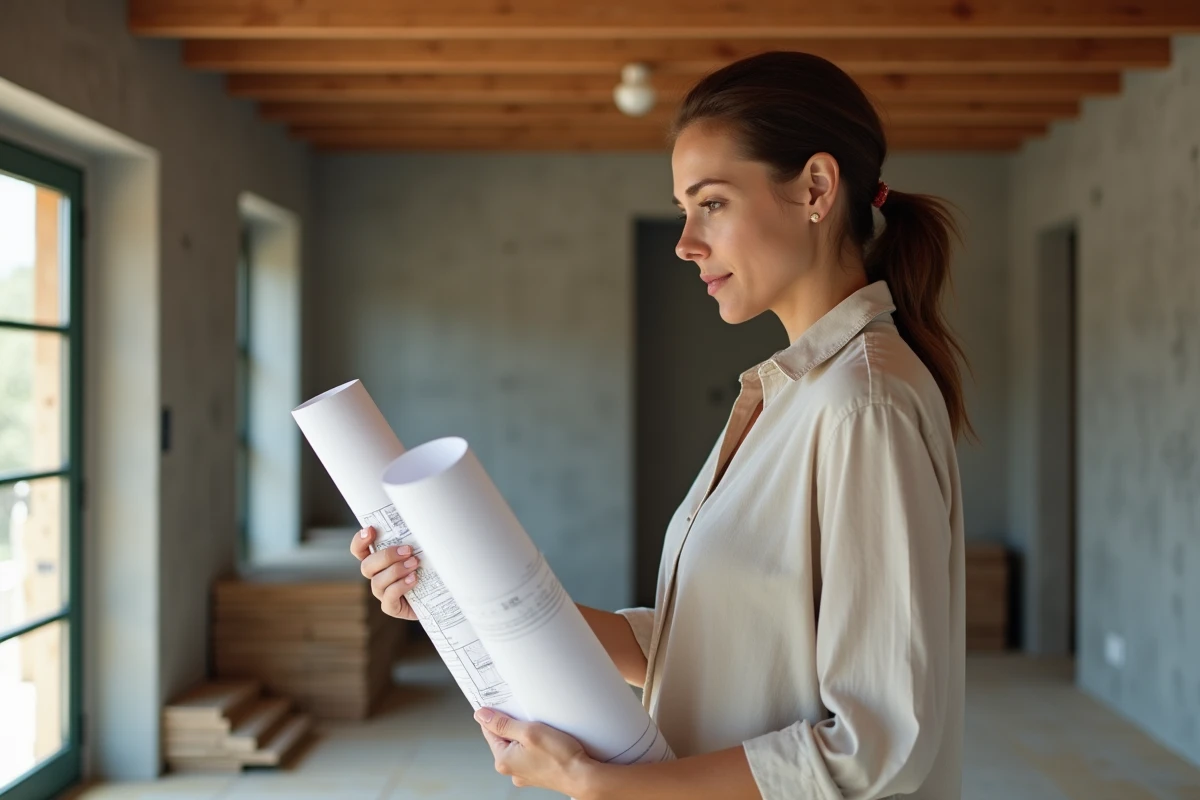
Designing and arranging the house of your dreams requires precise decisions from the very first sketches. Land orientation, room distribution, material choices, energy constraints: every decision made in advance influences the final cost, daily comfort, and long-term value of the property. Comparing these parameters allows you to prioritize before starting the construction.
Energy performance and design: what the European directive 2024 changes for your project
Most construction guides focus on decoration or neighborhood selection. They overlook a regulatory constraint that changes the very way plans are drawn. The Directive (EU) 2024/1275 on the energy performance of buildings, adopted in April 2024, strengthens the renovation trajectory of the European real estate stock.
For a new project or a major renovation, this means that insulation, ventilation, and the choice of joinery must be integrated from the design phase, not added later. A layout that places living spaces to the south and technical areas to the north reduces heating needs without additional construction costs.
In France, the increasing restrictions on renting energy-inefficient properties (DPE schedule updated in 2024-2025) adds another layer of constraint. If you plan to rent your property someday, a poor DPE rating can block market entry.
Anticipating this point during design avoids costly corrective work a few years later. The projects presented on the Ma Maison Idéale website illustrate this approach where layout planning and energy performance are decided together.

Construction budget and layout: distributing expense items
The budget for a house is not limited to the structural work. The distribution among different items determines the final quality of the layout. Here is a comparative table of the major expense items to consider, ranked by their impact on living comfort.
| Expense Item | Relative Share in Total Budget | Impact on Daily Comfort |
|---|---|---|
| Structural work | The largest share | Strength, durability, thermal inertia |
| Insulation and ventilation | Significant share, often underestimated | Indoor temperature, air quality, energy bill |
| Exterior joinery | Average share | Brightness, sound insulation, security |
| Interior layout (kitchen, bathrooms) | Variable depending on choices | Functionality in daily life, ergonomics |
| Finishing work | Adjustable share | Aesthetics, personalization |
Insulation and ventilation represent the item with the best return on investment. One euro spent on effective insulation generates recurring savings on the energy bill throughout the building’s lifespan. In contrast, decorative finishes, as pleasant as they may be, do not affect either the property value or the energy rating.
Plans and room layout: three technical decisions to make early
Competitors readily list generic advice on optimizing spaces. Three specific decisions deserve deeper analysis because they are difficult to correct once the walls are up.
Orientation of openings and natural light
The orientation of the land dictates the placement of windows. A main facade facing south or southwest maximizes solar gain in winter and reduces reliance on artificial lighting. Placing the main living area on the south side remains the most cost-effective choice in terms of passive thermal comfort.
Low-occupancy rooms (garage, pantry, laundry) benefit from being positioned to the north, where they serve as thermal buffers.
Interior circulation and usable area
An excessively long distribution corridor consumes square meters without functional value. Compact plans, with short circulations, free up living space. Three criteria allow for evaluating the efficiency of a plan:
- The ratio between usable area and total area (footprint) should remain as high as possible, which means limiting unnecessary clearances
- Each room should be accessible without crossing another living space, to preserve privacy and usage flexibility
- Technical networks (water, electricity, ventilation) benefit from being grouped on one or two load-bearing walls, which reduces duct lengths and installation costs
Plan adaptability: anticipating changes in use
A non-load-bearing wall is inexpensive to move, while a poorly placed load-bearing wall locks the layout in place for decades. During design, clearly identifying structural walls and leaving lightweight partitions between secondary rooms allows for adapting the home to the family’s evolution (office converted into a bedroom, two small rooms merged into a master suite).
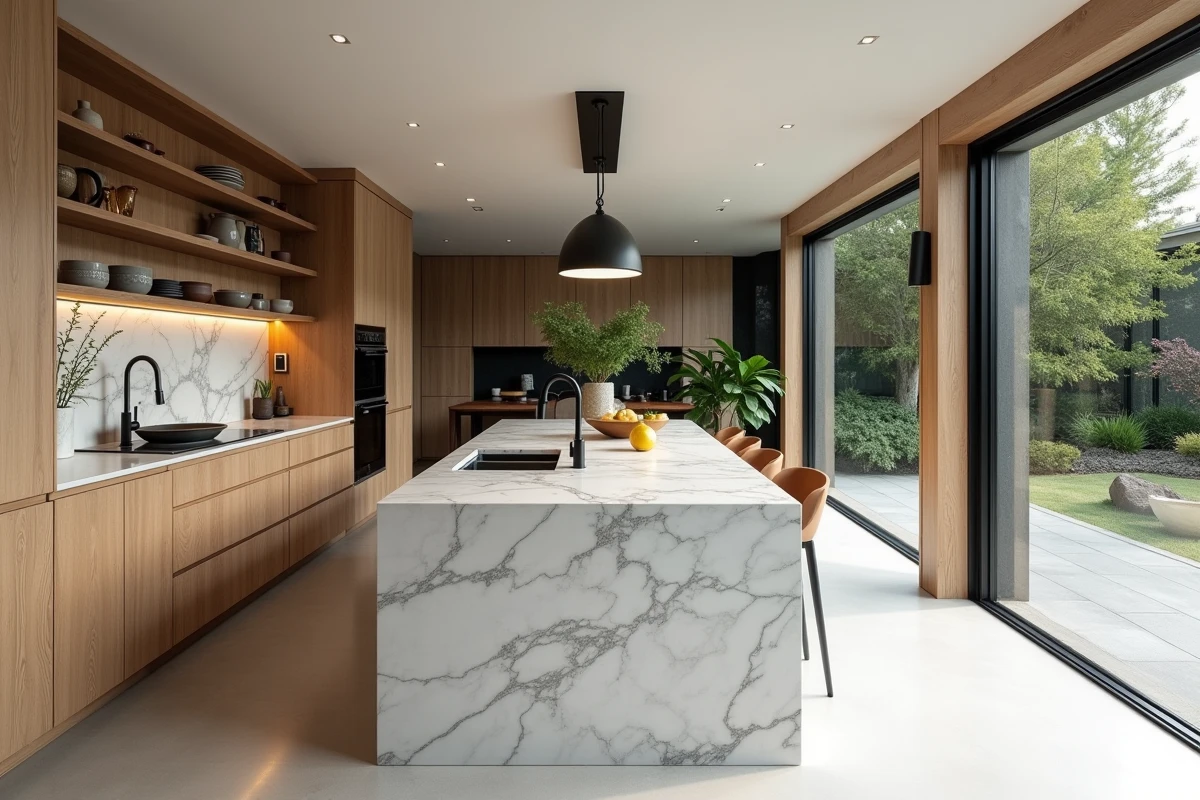
Choosing construction materials: comparing durability and maintenance
The choice of materials is not just an aesthetic question. Two technical criteria separate durable options from solutions that generate hidden costs in the long run.
The first criterion is mechanical durability. A structural material (block, brick, solid wood, wood frame) should be evaluated based on its resistance over time, not just its price per square meter at installation. Solid wood, for example, offers excellent thermal inertia but requires regular treatment against moisture depending on the region’s climate.
The second criterion is the maintenance cost over the building’s lifespan. A cheap exterior coating that requires repainting every ten years is more expensive than wood cladding or exposed brick, which requires almost no maintenance.
- Monomur brick: good thermal inertia, low maintenance, slower installation
- Wood frame: quick construction, high thermal performance, attention needed on air tightness
- Block with external insulation: common solution, controlled cost, performance dependent on the quality of the chosen insulation
The choice between these materials depends on the land, local climate, and available budget for structural work. Comparing the total cost over twenty years (installation, maintenance, energy consumption) provides a more accurate picture than just the initial estimate.
Your dream house is built first on measurable technical decisions. A well-oriented plan, a budget allocated in favor of the thermal envelope, and materials chosen for their long-term durability produce a result that remains comfortable and valued long after the construction is completed.