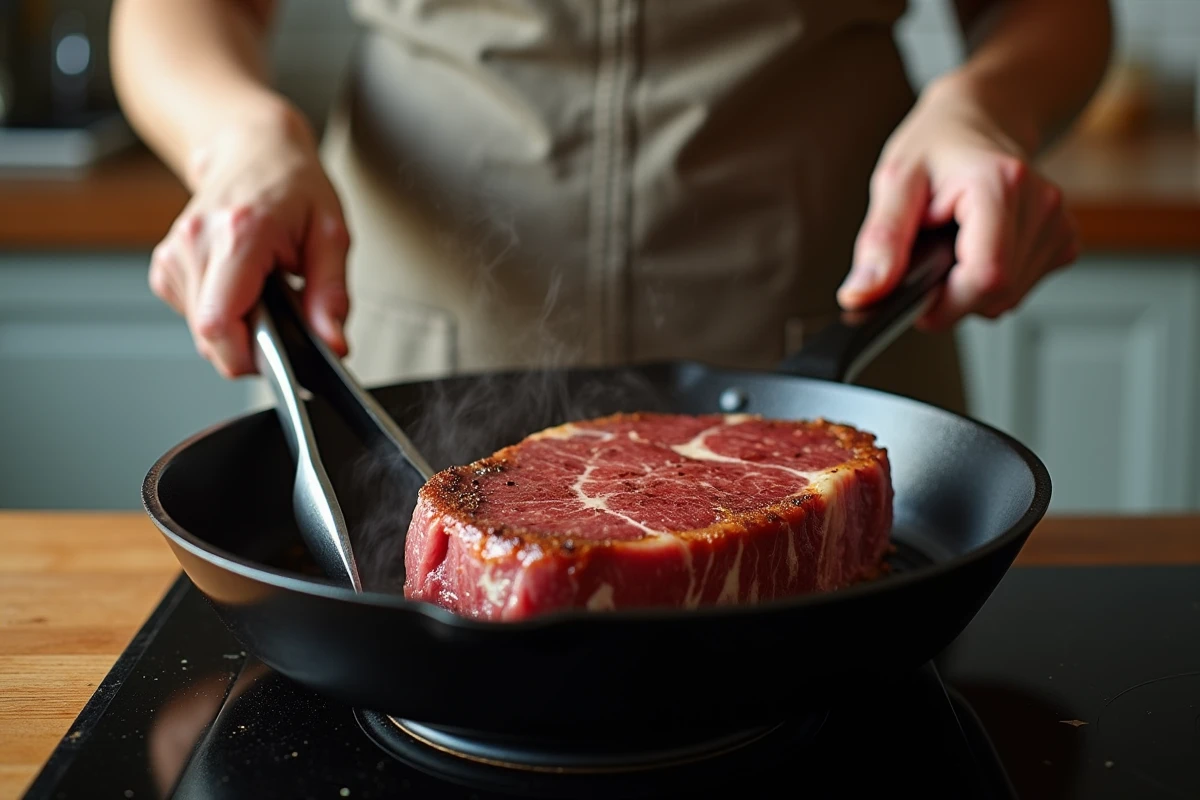
A ribeye steak cooked the day before, taken out of the refrigerator, loses some of its juices as it cools. The muscle fibers contract, and water migrates to the outside of the meat. Reheating this piece of beef without drying it out requires understanding a simple parameter: the applied temperature must remain low, and the reheating time must compensate for this gentleness.
Adjusting Reheating to the Initial Cooking Level of the Ribeye
You may have noticed that a rare ribeye reheated in the microwave always ends up medium, or even well done? This is the main trap, and most reheating guides completely ignore it.
A rare ribeye has a center that only reached a moderate temperature during the initial cooking. Every additional degree during reheating raises the cooking level by one notch. If the piece was rare, the margin before it turns medium is slim. If it was already well done, the risk to the overall texture is lower, but the meat will still lose more juice.
Specifically, to find good tips for reheating a ribeye, you need to think in two distinct categories.
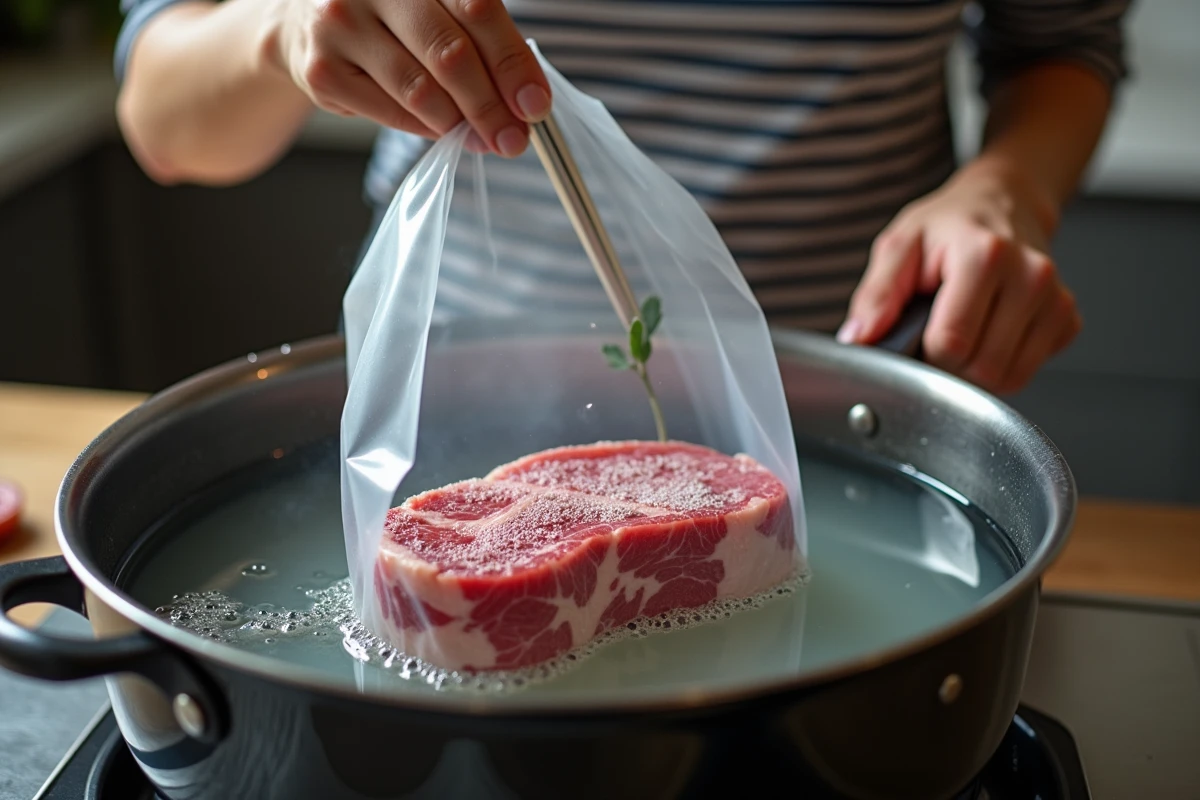
For a ribeye that was initially rare or medium: prioritize very gentle reheating, at low temperature in the oven, aiming to warm the center without ever reaching the heat of the initial cooking. A water bath or the sous vide technique in warm (not boiling) water are the safest options.
For a ribeye that was initially well done: the margin for maneuver is wider. A skillet over medium heat with a fat works, as the risk of overcooking the center is low. The goal is simply to bring the meat to a pleasant temperature, without trying to recreate a crust.
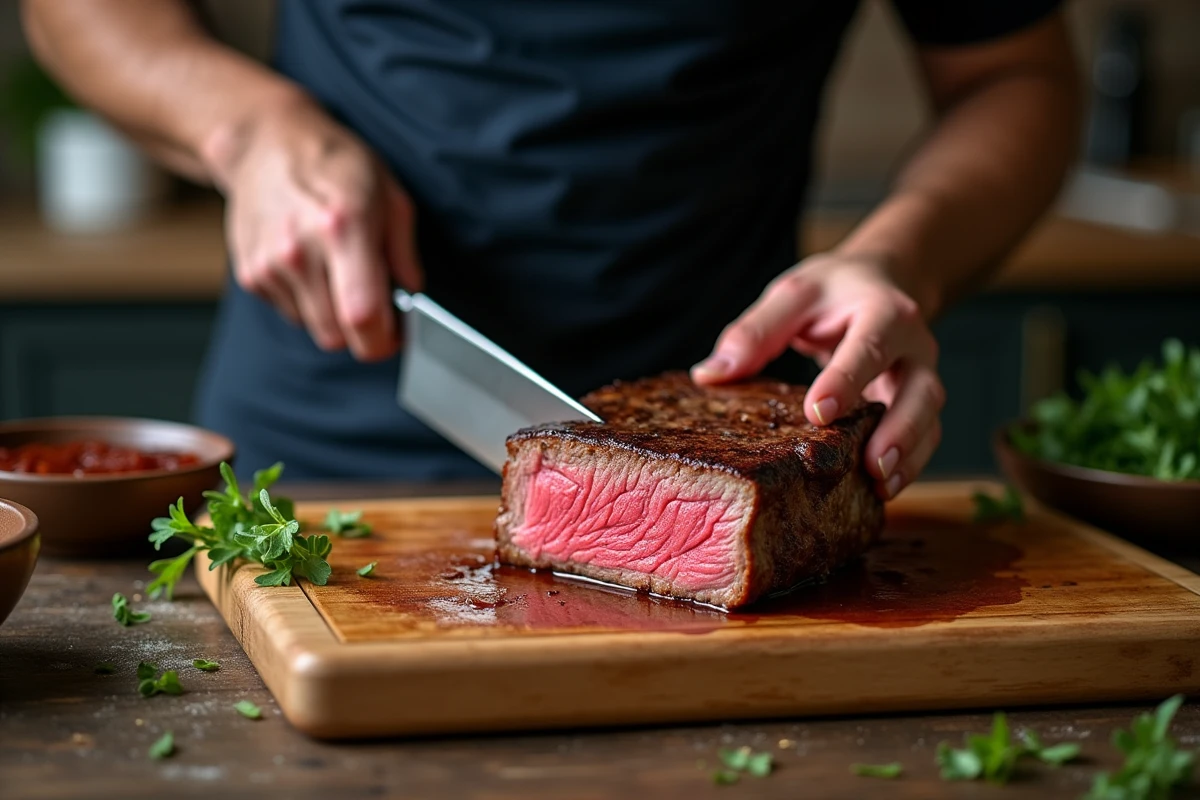
Reheating a Ribeye in the Oven at Low Temperature
The oven remains the most reliable method for a thick ribeye. The principle relies on enveloping and gentle heat that penetrates the meat without brutalizing the outer fibers.
Preparation Before Baking
Take the ribeye out of the refrigerator about twenty minutes beforehand. A cold center will take longer to warm up, which exposes the edges to overcooking while the heart remains cold.
Wrap the piece in aluminum foil with a spoonful of broth or meat juice. This liquid will create a humid micro-environment inside the foil, limiting evaporation. Without this addition, the surface dries out quickly.
Temperature and Duration in the Oven
Set the oven to a low temperature. The idea is to reheat without recooking. Place the wrapped ribeye on a rack or a tray, and let it gradually come to temperature.
- For a ribeye that was originally rare, watch closely: remove it as soon as it is warm in the center, not hot
- For a medium ribeye, leave it a few more minutes, still in the aluminum foil
- For a well-done piece, the time can be a bit longer without major consequences on texture
The aluminum foil should only be opened at the moment of serving. If you remove it during reheating, moisture escapes and the meat dries out in a few minutes.
Reheating a Ribeye in a Skillet Without Drying It Out
The skillet is mainly suitable for ribeyes that were already well done, or for thin slices. For a thick piece cooked rare, this method is risky: the direct heat from the surface raises the temperature too quickly at the edges.
Heat a drizzle of oil or a knob of butter over medium-low heat. Place the ribeye in the skillet and cover with a lid. The lid traps steam and creates a steaming effect that protects the surface.
Flip the piece only once after a few minutes. Add a spoonful of water or veal stock to the skillet if the surface starts to sizzle too much. Intense sizzling indicates that the water from the meat is evaporating, which is exactly what we want to avoid.
Microwave and Ribeye: The Last Resort Method
The microwave heats meat unevenly. The waves penetrate the piece in zones, creating hot spots where cooking progresses and areas that are still cold. For a ribeye, the result is often rubbery meat on the edges and warm in the center.
If this is the only option available, reduce the power to half or a third of the maximum power. Proceed in short intervals, turning the meat between each session. Place a glass of water next to the plate in the microwave: the water absorbs some of the waves and slows down the reheating, which reduces temperature discrepancies.
This method is still not recommended for a rare ribeye. The transition to medium cooking is almost inevitable in the microwave, regardless of the power chosen.
What Really Protects the Meat Juices During Reheating
Beyond the chosen method, three parameters determine whether the ribeye will remain tender or end up dry:
- Cutting before reheating is to be avoided: a sliced ribeye loses its juices through all exposed surfaces, while a whole piece retains its liquids inside
- Adding a fat or liquid (broth, cooking juice, melted butter) partially compensates for the water already lost during the initial cooking and chilling
- The resting time after reheating is as important as after the initial cooking: let the meat rest for two to three minutes before slicing, so that the juices redistribute within the fibers
Only slice the ribeye at the last moment, after a short rest. This simple gesture makes a visible difference on the plate: the juices stay in the meat instead of running onto the dish.
Reheating a cooked ribeye will never be equivalent to fresh cooking. The loss of quality is real, but it can remain minimal with gentle temperature, a humid environment, and especially an adaptation to the original cooking level. A rare ribeye requires more precautions than a well-done one, and this distinction changes the entire outcome.