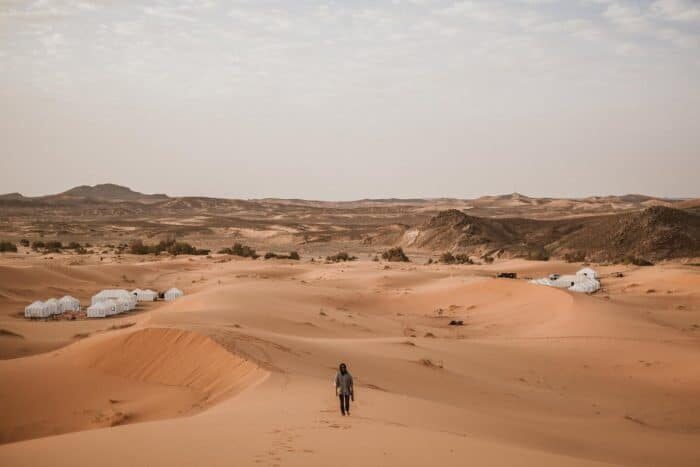
Imagine a journey to a land where the sun reigns supreme, where the air is so hot it becomes almost palpable. This land is the Lut Desert in Iran, holder of the world record for ground temperature, with mercury that can rise to 70.7 degrees Celsius. The label ‘Furnace of the Earth’ is not misplaced, and yet this extreme place fascinates and attracts. Whether for the Martian beauty of its landscapes of sand and salt, or the incredible adaptation of its fauna and flora to these extreme conditions, the Lut Desert has much to offer those who dare to explore it.
Senses awakened under the blazing sun: an exceptional sensory journey
In the vastness of the Lut Desert, located in Iran, lies the hottest country in the world. This arid expanse holds the world record for the highest temperature ever recorded on Earth, at 70.7°C. This impressive number reflects the challenges faced by the living beings that inhabit this extraordinary place.
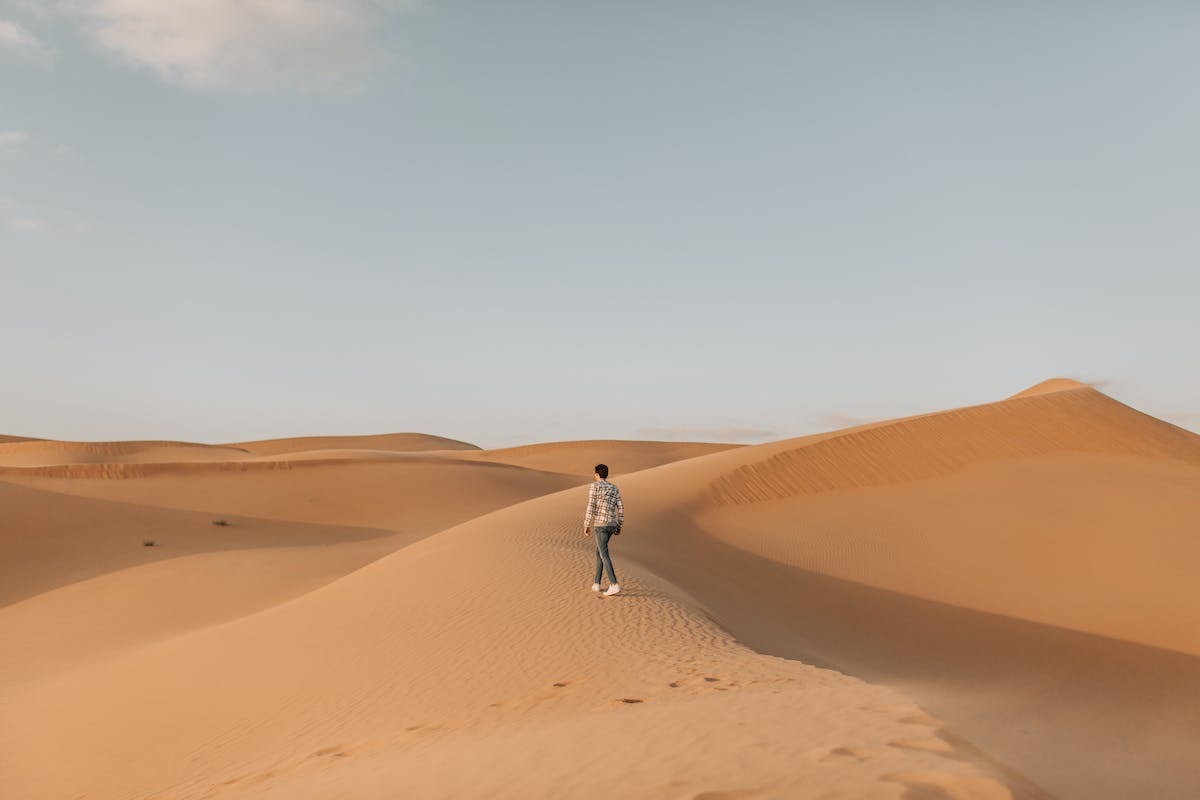
Despite a merciless burning sky and scorching ground beneath your feet, these lands still offer a natural beauty with a multitude of contrasting colors; the golden dunes that seem to stretch endlessly to the horizon and the salt flats with iridescent reflections undoubtedly captivate the imagination.
Beyond its extreme climatic conditions, the landscape of the desert is rich and diverse. The wind-eroded rock formations create a striking tableau where each ridge tells its own millennia-old story. These reliefs shaped by the brutal force of the elements serve as a powerful reminder of our insignificance in the face of nature’s relentless grandeur.
Do not be mistaken: this fiery land harbors much more than a hostile environment. There exists here a surprising biodiversity adapted to survive in these inhospitable conditions; certainly one of the most resilient in the world. Endemic plants have developed an incredible capacity to adapt to intense heat, coexisting with robust animal species, each with their own strategies to thrive despite everything.
This place known as ‘the hottest country in the world’ is also marked by its unique cultural heritage: collections of ancestral stories passed down through generations of nomads who have learned to interact harmoniously with their harsh environment to ensure their survival.
Traveling to this singular place requires preparation and vigilance; but armed against the destructive rays of the sun and with sufficient hydration, you will be able to discover a majestic spectacle that will remind you of how beautiful our planet is… even in its most arduous corners.
Majestic landscapes: a beauty that defies the elements
In the heart of this furnace, biodiversity reveals itself as a feat of evolution. Many plant species have managed to adapt to the extreme conditions of the Lut Desert. Among them are shrubs like Calligonum and Tamarix, capable of drawing water from the depths of the arid soil thanks to their powerful and extensive roots.
What is even more astonishing are the succulent plants such as Euphorbia turcomanica or Zygophyllum fabago. These true masters of adaptation have developed fleshy leaves capable of storing the water they need to survive during prolonged dry periods. Their ability to store this precious resource allows them to endure months without rain with remarkable resilience.
On the animal side as well, nature has shown ingenuity and resilience to meet the climatic challenges posed by this hostile environment. Reptiles dominate here: black spiny-tailed lizards (Uromastyx ornata) with bodies covered in thick scales limiting water loss through evaporation, and spotted leaf-toed geckos (Asaccus cf nasrullahi) hiding in rocky crevices where they find a bit more coolness.
The insectivorous fauna is not to be overlooked, with species like Scorpio maurus, a black scorpion that has developed a resistance to extreme heat and whose sting is feared. Migratory birds also take advantage of this inhospitable region as a resting area during their seasonal migrations, sheltering in temporary oases where underground water surfaces.
But perhaps one of the most fascinating adaptations is that of mammals. Among them is the fennec (Vulpes zerda), a miniature fox with large ears that help it dissipate body heat more easily. Its thick fur acts as thermal insulation to protect it from the freezing cold of desert nights.
As you explore this austere yet captivating landscape, it becomes evident that every living being here has found its own strategy to survive and thrive despite the extreme conditions. This unique biodiversity is a testament to unparalleled ingenuity and extraordinary adaptability.
As you traverse these burning lands, take a moment to contemplate this fragile harmony between the relentless nature and the living beings that have managed to find their place within it. A visit to this incredibly hostile environment will undoubtedly evoke a deep admiration for the infinite power of life and its ability to flourish even in the harshest conditions.
Unique biodiversity in the face of extreme heat: a surprising adaptation
In the face of this scorching climate, daily life in this region presents numerous challenges and stakes for the inhabitants. The first difficulty lies in access to water, a precious and rare resource. Local populations have had to develop ingenious techniques to tap into underground water and store it efficiently. Deep wells have been dug to capture aquifers, and every drop is used sparingly.
Agriculture is also a major challenge in this hostile environment. Traditional crops are difficult to maintain due to the lack of water and nutrient-poor soil. Some local farmers have succeeded in cultivating specific varieties that are adapted to the extreme conditions of heat and drought. They use techniques such as drip irrigation or terracing to maximize the use of every drop of water.
The management of natural resources is also a crucial issue in this desert landscape.
Daily challenges in a scorching climate: life and survival in adversity
The traditions and customs of this country with scorching temperatures are truly fascinating. The inhabitants have developed unique practices to cope with these extreme climatic conditions.
The first tradition worth highlighting is that of clothing. The locals wear loose-fitting garments made of lightweight and breathable fabrics to protect themselves from the burning sun while promoting the evaporation of sweat. These traditional outfits are often colorful and adorned with intricate patterns, reflecting the cultural identity of the people.
Another important tradition is related to food. In this scorching country, meals are structured around a balanced diet adapted to the hot climate. Traditional dishes highlight a variety of water-rich foods, such as juicy fruits and fresh vegetables. They also favor spices and condiments that help withstand the heat while adding an explosion of flavors to the dishes.
Music also holds a central place in this society animated by the vibrant rhythm of the arid desert.
Traditions and customs in a torrid country: a fiery culture
When you decide to explore this fascinating country, certain precautions should be taken to ensure your safety and comfort. Here are some tips to help you fully enjoy your journey.
It is recommended to prepare well before departure. Learn about the local climate conditions and adapt your wardrobe accordingly. Opt for lightweight and breathable clothing, as well as hats or scarves to protect your head from the blazing sun.
Be sure to stay hydrated at all times. High temperatures can lead to rapid dehydration, so always carry a reusable water bottle and drink regularly throughout the day. It may also be wise to avoid the hottest hours of the day by planning your activities in the morning or evening.
When exploring the scorching landscape, do not underestimate the intensity of the sun. Use high SPF sunscreen to avoid unpleasant sunburns and protect your eyes with sunglasses suitable for extreme light conditions.
Do not hesitate to ask local residents for advice when it comes to outdoor activities or specific routes. They know their natural environment better than anyone and can guide you to safe and beautiful places.
By following these tips, your exploration of this country with the hottest climate on the planet will be safe and comfortable. Fully enjoy this unique experience that will allow you to appreciate the wonders that this burning land has to offer.